Pedro Vinícius Bertulino de Menezes
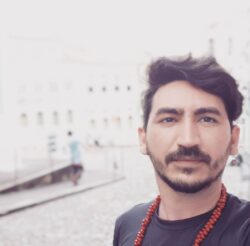
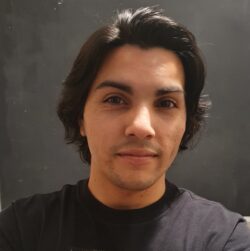
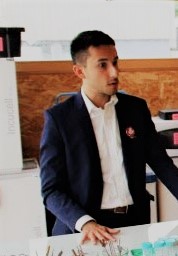
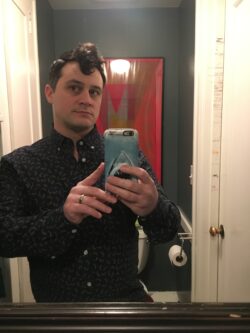
Estudante de Engenharia Agronômica na Universidade Federal de Sergipe (UFS). Atualmente venho atuando na área da Fitopatologia, principalmente no desenvolvendo de pesquisas destinadas a bioprospecção de microorganismos que tenham a potencialidade de atuarem no controle biológico de doenças de plantas.
Sou de Penedo/AL, considerada uma cidade ribeirinha do rio São Francisco, pelo qual sempre foi minha maior inspiração para sonhar em ser cientista. A Universidade foi um lugar muito acolhedor no meu processo de autoconhecimento, principalmente através das ações dos Movimentos Estudantis. Ainda sou novo e tenho muitas experiências para vivenciar, mas hoje já entendo a minha importância como gay de está ocupando espaços na Ciência, tanto por aqueles que lutaram para eu chegar até aqui, como também pelas novas gerações que estão por vim.
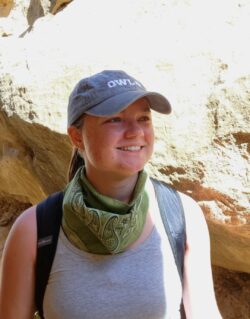
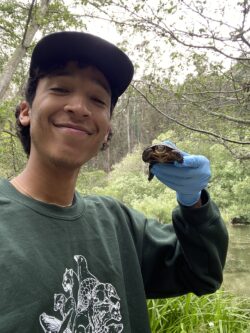
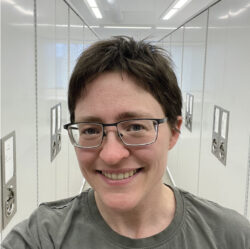
I found STEM and Science Communication after I left a career in professional sports. My team and coaches had been such a supportive community, and I was worried I might not find that in science and academia. But I always knew I liked to share what I was passionate about and talking to strangers is my favorite thing. Now I’m working my dream job, telling the stories of the specimens housed in the Museum of Southwestern Biology and getting a degree in Sci Comm and Museum Studies. I’m proud to be a part of the next generation of scientists and I’m glad to say I’ve found a new community that’s just as supportive of who I am. I hope that in the future this’ll be the standard and more people will be comfortable pursuing careers in STEM.
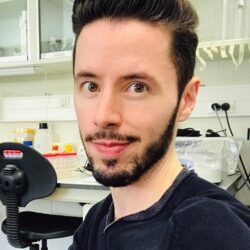
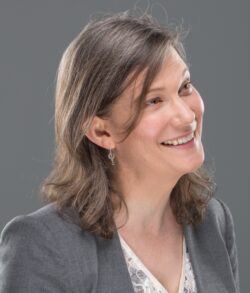
I have always been passionate about nature from a very young age, so studying Biological Sciences was a no-brainer. I obtained my BSc in Biology-Geology from the University of Minho (PT) in 2014 and my MSc in Ecology from the same university in 2016, specializing in Plant Nematology.
I am currently a PhD candidate at the University of Évora (PT), carrying out my thesis at the Nematology laboratory of the National Institute for Agrarian and Veterinary Research (PT), where I’m exploring the biological control potential of several fungi against the pinewood nematode, a quarantine organism that is ravaging native pine trees in Portugal.
Out and proud!
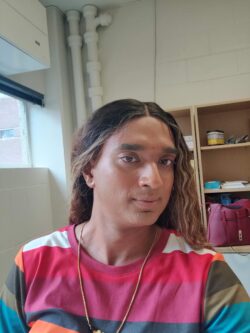
I am a PhD candidate at the University of California, Berkeley where I research how societal inequity and environmental injustices influence biodiversity, wildlife behavior, and wildlife health. I’m interested in how the systemic and structural oppression of humans leaks into ecological processes to directly shape the phenotype of animals and the environment wildlife experience.
I use many facets of my identity, including being Black, Latin, and Queer, to inform the questions I ask and how I engage with the field of ecology. I see many parts of myself reflected in the urban wildlife I study, primarily coyotes and raccoons, as individuals that are misunderstood and often mischaracterized by the general public – similar to how my otherness (e.g., Queerness) may be (or is) misunderstood. Researching these misunderstood and multifaceted animals has helped me situate in and learn more about my queerness in ways I would’ve never imagined 🙂
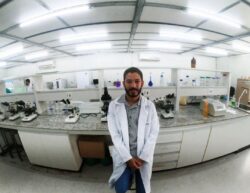
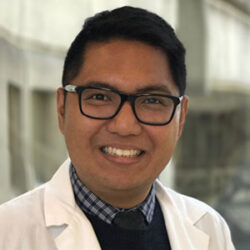
I completed my B.Sc. in Biology specializing in Genetics (2011) and Ph.D. in Medical Science specializing in Physiology and Pharmacology (2017) at McMaster University. My doctoral work focused on the immunobiology of B cells in allergic asthma.
I completed a postdoc at Stanford University in the Department of Pathology (2021) studying the heterogeneity of astrocytes and the blood brain barrier in Alzheimer’s disease.
I am an Adjunct Faculty Member at McMaster University in the Department of Medicine in the Division of Respirology and actively supervise undergraduate students for project courses and honours theses.
I work as Principal Biomarker Scientist and Group Leader at Genentech in the Department of Translational Medicine.
I enjoy mentoring students and leading advocacy initiatives taking inspiration from my Filipino, 2SLGBTQIA+ and First Gen intersectionalities.
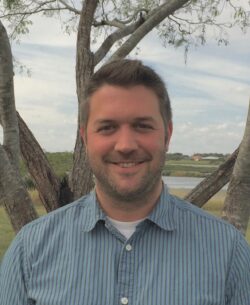
I am a marine biologist who focuses on fish ecology, migration and food web dynamics. I use geochemical tracer techniques to examine different aspects of fish movement and environmental stress. I am passionate about teaching and mentoring the next generation of scientists.
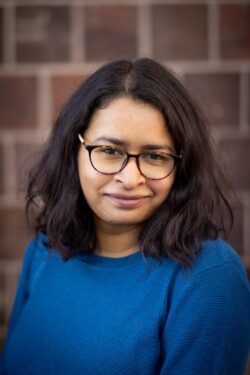
I’m pansexual and an immigrant to the USA, making my mark in the world of research while championing LGBTQ+ representation and embracing diverse backgrounds. I recently completed my first year in a PhD program, where I’m diving deep into the fascinating realm of maternal fetal medicine. Some day I hope to use my privilege of being an immigrant woman in STEM to ensure everyone without that opportunity gets it as well. I hope my work and my path leads others to embrace their identities, pursue their scientific dreams fearlessly, and create a more inclusive world. Beyond my academic pursuits, I actively engage in conversations about intersectionality, equality, and the future of science. I believe that embracing our unique identities and backgrounds fosters a more vibrant and impactful scientific community. Outside research, you can often find me trying to cook new things, exploring new cuisines in my kitchen, indulging in various creative outlets and connecting with the community.
I first identified my passion for marine life in third grade, but it wasn’t until my first year at Carleton College that I realized I wanted to become a professional in marine biology. I have studied abroad in the Caribbean with the School for Field Studies and in the Pacific with Sea Education Association, and I am now a research assistant in a marine biology lab at Carleton. Throughout this journey, I have confronted personal challenges involving my mental health, disabilities, and queer identity, the sum of which has created some doubt as to whether I should pursue my interest in science. Nonetheless, I have decided to continue on with my academic career while prioritizing my wellbeing and contributing to the causes that matter to me. After I finish my undergraduate degree and my PhD I want to mentor the next generation of scientists while living proudly as a disabled, autistic, queer scientist.
I’ve always loved the ocean and ocean life from a young age. I became the annoying town activist in my community because of it. Growing up, I never met a single person who was queer, like me, in a STEM field. Even now, in my 20s, I’ve only ever met other people my age trying to get their degrees but no professionals. Then I was able to talk to Dr. Shayle Matsuda, a Microbiologist who is openly queer, and he introduced me to a whole group of people in STEM I never even knew existed.
I’m currently an undergraduate student trying to get a degree in Environmental Studies and Film. During grad school, I hope to focus on marine animal behavioral studies. I want to use art and science together to help reach larger audiences and help people understand science and things like pollution, climate change, ocean acidification, etc., in an easier/more accessible way.
I am a clinical research nurse in the department of infectious diseases at Cincinnati Children’s Hospital. I have a background in research biology and critical care cardiac nursing. I work on studies focused on everything from vaccine safety (COVID, RSV) to epidemiology (prevalence of vaccine-preventable diseases) to immunobiology (T cell function, gut microbiome). It is my job to ensure research procedures are conducted safely & to provide assessment and care for human research subjects. As the public-facing member of a research team, I spend a lot of time teaching the public about clinical research and encouraging participation in studies. To be able to recruit from a diverse population, this requires understanding how different people may view medical care & research, and how life experience and historical trauma can affect their trust of medical professionals. Outside of work, I am an avid gardener & cook, and a native plant and bird nerd!